
Posts Tagged ‘Innovation’
The Year 2014 in Review
February 4, 2015
2014 was my first full year with HIMSS in consumer health and full of opportunity.
In January, I went to my first Consumer Electronics Show in Las Vegas. It was as massive as I heard, full of large screen TVs, many curved screens, drones, health trackers, etc. I spent most of the time at the Digital Health Summit – a well organized event including patient panels, fitness health device startups, wellness programs, and a demonstration of a exoskeleton. Got to catch up with some friends including Hugo Campos.
At the end of February, I experienced my first HIMSS conference as staff rather than member. A series of full days in Orlando, most of the time spent managing the new Connected Patient Learning Gallery which was a big success with speakers including Lygeia Ricciardi and Regina Holliday both painting and speaking. Great to spend time with other HIMSS staff and understand what it takes to pull of a successful conference of 36,000 participants.
One of the advantages of working in the Global Center for Health Innovation in Cleveland is that it is attached to the Cleveland Convention Center. As a result, I had the opportunity to attend the Cleveland Clinic Patient Experience Summit in May, the Case Management Society of America in June and the Cleveland Clinic Innovation Summit in October.
In June, I had the opportunity to speak at the Northern Ohio HIMSS conference on the Value of Patient Engagement. There were several other chapter meetings, chapter leader institute, meaningful use meeting and the Nursing Informatics Institute, all well delivered HIMSS events.
In November, I had a great opportunity to present at the D-Data Exchange and attend the Diabetes Mine Innovation Summit. Although I had been to other events like MedicineX and Health 2.0 which advocate for patients and include patients throughout their programs, Diabetes Mine is a close-knit and strong advocacy group of Type 1 diabetics who know their technology and know policy to make their lives better. See my blog post about this on the Maker Culture in Healthcare.
In December, I returned to the HIMSS mHealth Summit in DC. Great presentations on cutting edge technology with an emphasis on what new ideas work and how they can impact patient outcomes. There was also talk about co-development of new apps and technology with patients. I also enjoyed the international flavor of the conference, especially the African representatives discussing ways to use mHealth to address the Ebola crisis.
I had book chapters published including:
- a chapter on social media
- A revision of my chapter on eResearch in the Health Informatics textbook
- A chapter on Computing and Information in a book on Wireless Health
Also, I had 3 publications, two journal articles as coauthor with the Chronic Kidney Disease Registry at Cleveland Clinic.
It was also an active year for blogging:
- Most of my blogging activity moved to the HIMSS blog
- In October, I began LinkedIn long posts on “This Week in Patient Engagement” which has been successful.
I continue to teach a online course on Clinical Analytics for Kent State University. Great students and a great opportunity. Looking forward to developing a second level course on analytics in 2015.
In 2015, there will be few posts here but more at HIMSS and LinkedIn. Please follow me there.
Share this:

The Responsive City: Open Data
November 10, 2014
 Last week I went to a presentation at the City Club of Cleveland by Susan Crawford from the Berkman Center for the Internet and Society. She is the author of The Responsive City: Engaging Communities Through Data-Smart Governance. Just a couple of gems from her presentation:
She sees 3 layers – Fiber, Sensors and Screens. That is, a layer of fiber as the backbone of the digital city, sensors everywhere to collect data about the city and screens to visualize data in ways that are meaningful for decision makers and citizens
- “Data on the walls of the city” – again, making data available everywhere to improve the life in the city. This brought to mind the opening of Fulton Center in New York City – the transportation hub which has screens everywhere.
Worth following this topic and read her book.
Share this:
Glass in Medicine – Why There is Promise
August 19, 2013
In an interview on GlassStories, Kyle Samani gives the most cogent discussion of the pros and cons of Glass. He emphasizes that there is a cost to glass – not just financial but the fact that you have to wear them all the time while you have a fully functional smart phone in your pocket. So he sees limitations to the appeal to general consumers other than the geek coolness. However, on the enterprise side, especially in medicine, he sees real use cases. Specifically,
- physicians (and other healthcare providers) need their hands to work whether it is surgery or a physical exam
- physicians (and other healthcare providers) are mobile whether moving from one exam or hospital room to the next or traveling between care sites
- physicians (and other healthcare providers) are constantly interacting with people, either patients or colleagues
- physicians (and other healthcare providers) need to look things up, communicate with others
- physicians (and other healthcare providers) need to have clean hands – handling a mobile phone means transmitting germs, they need to wash their hands after each use even if they are using their mobile device at the bedside. The hands free commands in Glass enable them to avoid this
- he also thinks the privacy concerns are exaggerated – less deceptive than a mobile phone
Watch the full video interview.
Global Center for Health Innovation
August 15, 2013
Got to visit this new new center in downtown Cleveland last Friday. Great space to demo new health IT – sponsors committed, space still being built out.
See my post on Health IT Link, a new place to follow my content.


Further Thoughts on Google Glass
July 10, 2013
Here are some major advantages:
- hands free browsing and video/photos
- lightweight and minimally intrusive
- can look at someone while browsing or during a hangout rather than looking down at a cell phone
- many possibilities for uses in healthcare and medicine – see this article from iMedicalApps. One additional thought – how about physicians receiving alerts on their patients’ lab results via Glass
- camera quality is excellent
Some downsides or challenges for developers to fix:
- dependent on open wireless networks or activating your phone as a personal hotspot ($$$$$)
- messages, searches and alerts limited to short text – considering the scale of the device, not sure how much more we can expect. If there is something that requires more detailed attention, we are at least alerted and can view it on a laptop
- especially in healthcare, privacy concerns since one can take an image of anyone without their permission. Maybe the device should have a small light indicating that a recording or photo is being taken
- If you are close to someone who also has Glass, their device might follow your verbal commands, “OK, Glass”. This actually occurred during my orientation
- Availability of prescription Glass
Most of these are easy to solve. The challenge is using this new technology in healthcare, developing apps, use cases and broader adoption.
Share this:Google Glass – Day 3 – Future Applications for Healthcare
July 9, 2013
On day 3, I brought Glass to work and introduced it to my staff and others at the hospital. Unfortunately, I could not connect to the internet thru Glass. The private wireless network did not allow a connection from the device and the public network requires browser authentication (like many airports and hotels) which is not possible in Glass. So the main demo was videos and photos I had already taken and demonstrating how to take photos and videos or having Glass read aloud alerts, such as, those from the New York Times.
So what applications are there for medicine and healthcare for this device? Already there are many ideas coming forward:
- “Google Glass makes some people uneasy, but a medical app that tells folks how to perform CPR not only could save lives, but also highlights what’s so awesome about our connected, sensor-rich future.”
- Google Glass Invades Social Media With #ThroughGlass
- Chloe Glass – a simulator wearing Glass to evaluate medical practice in training
- Use of Glass in surgery
- How Google Glass Is Changing Medical Education
- Glass on hospital rounds
Share this:
Google Glass – Day 2
July 9, 2013
Day 2 was spent at home trying it out on my home network and showing it to neighbors. I was becoming more comfortable with using and wearing it. The hands-free aspect of Glass does have a freeing sense.
Sunday I discovered that a flood of NY Times alerts came through. Fortunately, Glass with read them to you if you like (headlines only). Also tried a Google search which resulted in a Wikipedia entry for some (first line) which was more or less relevant to my request. Since I don’t routinely use Siri or Google Voice, my proficiency with voice to text was lacking but this is something that could improve with practice.
Also attempted a video call to Lucien Engelen in the Netherlands. Unfortunately, it was choppy and the screen froze for both of us at times. Not sure if that was Glass, as I moved around the house trying to maintain the wireless connection or the speed of my wireless network or the international connection. Another item which would require more trial and error, common with adopting new technology.
Someone pointed me to this video by Sergey Brin at TED which starts with the intro to Glass and then his statements of the purpose of Glass – to move us away from staring down at our phones and again facing our fellow human beings while staying connected to the world. Interesting concept. Would like to see some human factor researchers do a test of highly connected people using a mobile phone vs. Glass.
Two examples of videos taken Saturday in NYC
These 20 second videos are easy to do with a voice command.
More tomorrow on potential applications in healthcare.
Data Mining, Algorithm Medicine and Skeptics
February 21, 2013
My recent Perspective on iHealthbeat focused on the uses of data mining of EMR data which are yet to be fully exploited. My thoughts were provoked by a New York Times article titled, Mining Electronic Records for Revealing Health Data. Although data mining in healthcare has gotten a bad reputation, an approach which respects privacy and a focus on research discovery can yield important results. The potential uses of EMRs in research is another opportunity yet to be realized.
A new article in The Atlantic, The Robot Will See You Now, discusses IBM Watson and other initiatives moving medicine toward what I call Algorithm Medicine and Artificial Intelligence. The potential of mining EMRs to generate real-time clinical decision support has exciting possibilities. However, there are skeptics, especially when the predictions expand to entertain the idea of replacing physicians. Realizing the limitations of technology must be acknowledge. For instance, the concerning problem of copy-and-paste in EMRs would have a negative affect on data mining those records. Also, data mining has presents real challenges both in defining research questions and finding the correct data to answer those questions.
So data mining shows promise but a realistic approach without wild predictions can lead to real discovery and impact on practice.
Share this:
The Learning Healthcare System and Order Sets
December 14, 2012
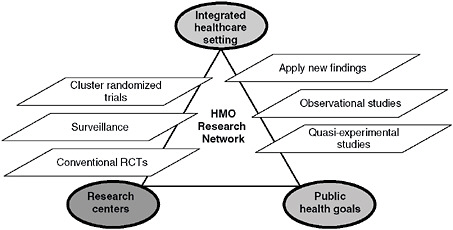
One of the most powerful concepts in changing healthcare is the Learning Healthcare System explained in most detail in this Institute of Medicine report. The concept of using evidence from research to rapidly into practice in a virtuous cycle. But how exactly to operationalize this concept?
Two recent examples are beginning to move along this path in utilizing data to develop customized order sets. One is IBM Watson working with Memorial Sloan Kettering Cancer Center. Using its powerful natural language processing (NLP), Watson is able to match patient data including complex genomics with the wide array of order sets available for different types of cancer. ” The medical center has about 2,000 order sets it can pull from when choosing a cancer treatment.” And data on millions of patients. Finding patterns that match requires the speed and logic of the Watson engine.
A second example uses existing medical knowledge and updates it as published and then converts these into order sets for a procedure-based EMR system. With their combination of the knowledge of current practices in tools like Up-To-Date and an EMR called Provation, they are now combining these products to enable the regular updating of order sets in the EMR including integration with comprehensive EMRs. This demonstrates the last mile of clinical decision support and evidence-based medicine. Bringing the latest discoveries to EMR order sets through an integrated solutions.
Looking forward to more solutions that fulfill the vision of the Learning Healthcare System.

Data Mining as an Essential Informatics Skill Set
November 29, 2012
Clinical Integrated Data Repositories are now become common at academic medical centers. With tools like i2b2 and RemedyMD, plus a broad range of analytic tools, access to large volumes of clinical data for research and population management is coming to maturity. The opportunities for use of this data in enabling clinical trials and accelerating research are promising. Quality and patient safety can also be enhanced through use of electronic medical records; a recent New England Journal of Medicine article by Dean Sittig details how to “Use EHRs to Monitor and Improve Patient Safety.” “Organizations must leverage EHRs to facilitate rapid detection of common errors (including EHR-related errors), to monitor the occurrence of high-priority safety events, and to more reliably track trends over time.”
To maximize these opportunities, physicians and other health professionals must develop skills in understanding and utilizing this data. Medical informatics has been successful in developing tools for data mining, but translating raw data into research questions and disease trends requires training medical professionals in new ways of thinking. Understanding clinical workflow in an EMR does not directly translate into this type of research. One must understand how the data is organized and coded to create disease cohorts for analysis. Informaticists are key in training a new generation of physicians in this skill. Because of the complexity of this clinical data, there are three approaches to this data mining and analysis:
- Self-service data mining enabled by cohort definition tools, both vendor developed and open source
- Analyst provided data – skilled data analysts can pull relevant data sets based on their understanding of the research question and the data. However, there are limitations on the number of experienced data analyst any organization can afford to meet the coming demand
- Predictive analytics – this is the realm of the biostatistician who will be key consumers of large data sets to create predictive models to be used in clinical practice. This is also a limited resource, so prioritizing predictive modeling projects which major impact is key
Data mining and analytics should be taught in medical schools for the next generation of providers. Data visualization will be helpful in exploring this complex, big data. More on this in a future post.
Share this: